Harper Schmidt · 2 October 2026
Examining Supply Chain Dynamics in Specialized Steel Manufacturing for Global Projects
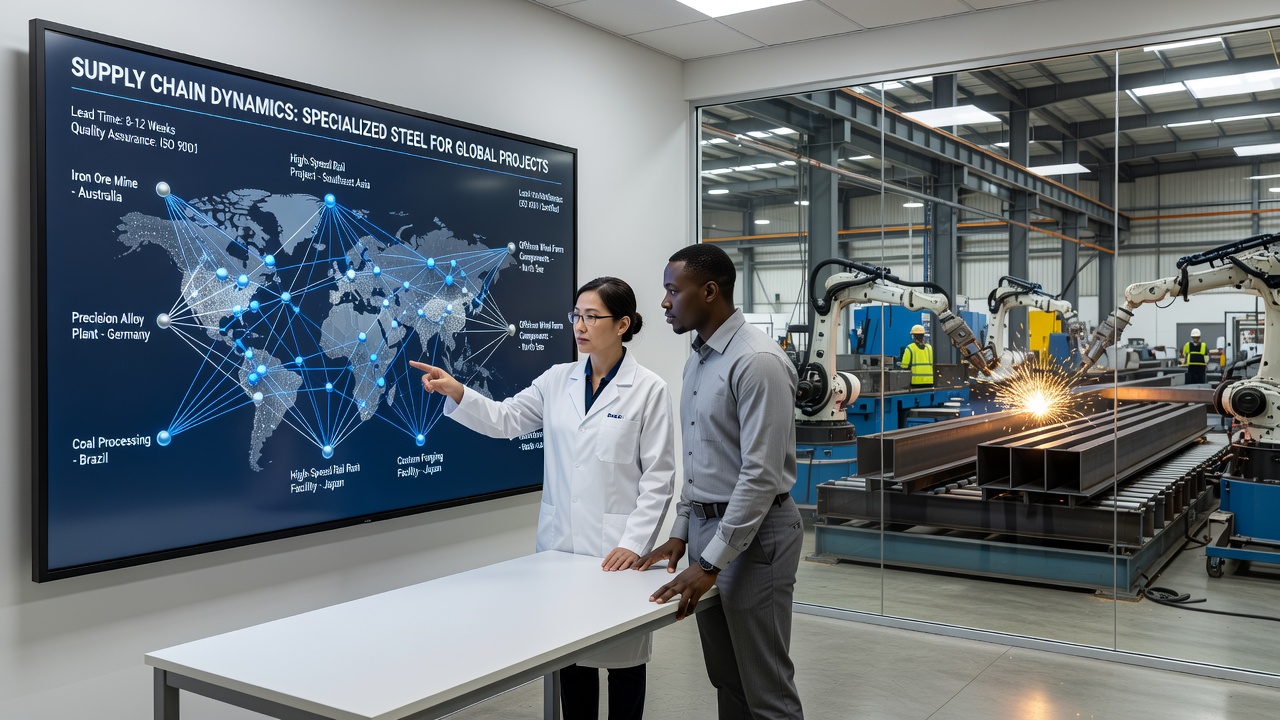
Specialized steel manufacturing supports global infrastructure through tightly coordinated supply chains that move raw materials from mines to processing facilities and onward to project sites across continents. Producers source high-grade iron ore and alloying elements such as nickel, chromium, and molybdenum from concentrated regions in Australia, Brazil, South Africa, and Canada, then transport these inputs to electric arc furnaces and rolling mills equipped for precise metallurgical specifications.
These operations differ from commodity steel production because they require batch-level traceability, controlled cooling rates, and certification under standards such as ASTM and EN. Data from industry reports indicate that lead times for custom grades often extend six to nine months when projects demand plates thicker than 100 millimeters or yield strengths above 700 MPa.
Raw Material Sourcing and Geographic Concentration
Mining output remains clustered, with Australia supplying more than half of the world’s seaborne iron ore and South Africa holding significant reserves of chromium. When one supplier region experiences weather disruptions or export policy shifts, downstream mills adjust recipes or stockpile intermediates months in advance. Researchers tracking vessel movements note that average transit times from Port Hedland to European ports reached 42 days in 2025, while routes from Brazilian ports averaged 28 days.
Alloying metals add further complexity. Nickel traded on the London Metal Exchange shows price volatility tied to Indonesian export quotas and battery demand, forcing steelmakers to secure long-term contracts or maintain buffer inventories equivalent to 60 to 90 days of production.
Production Scheduling and Quality Assurance
Specialized mills operate with narrower tolerances than standard facilities. Heat treatment cycles, vacuum degassing, and ultrasonic testing occur at specific stages, each adding days to the schedule. A single deviation in temperature or chemistry can downgrade an entire heat, requiring reallocation to lower-spec orders or scrap recovery. Production planners therefore integrate real-time sensor data with enterprise resource planning systems to maintain on-time delivery rates above 85 percent for certified material.
Logistics Networks Serving Global Projects
Finished products travel by rail to ports, then by breakbulk or container vessels to project locations in the Middle East, Southeast Asia, or North America. Heavy-lift carriers handle plates exceeding 20 tons, while specialized flat racks accommodate coiled products. Port congestion data compiled by maritime analysts showed average berth waits of 11 days at major Asian hubs during the third quarter of 2025, prompting some contractors to reroute shipments through secondary terminals in Malaysia and Vietnam.
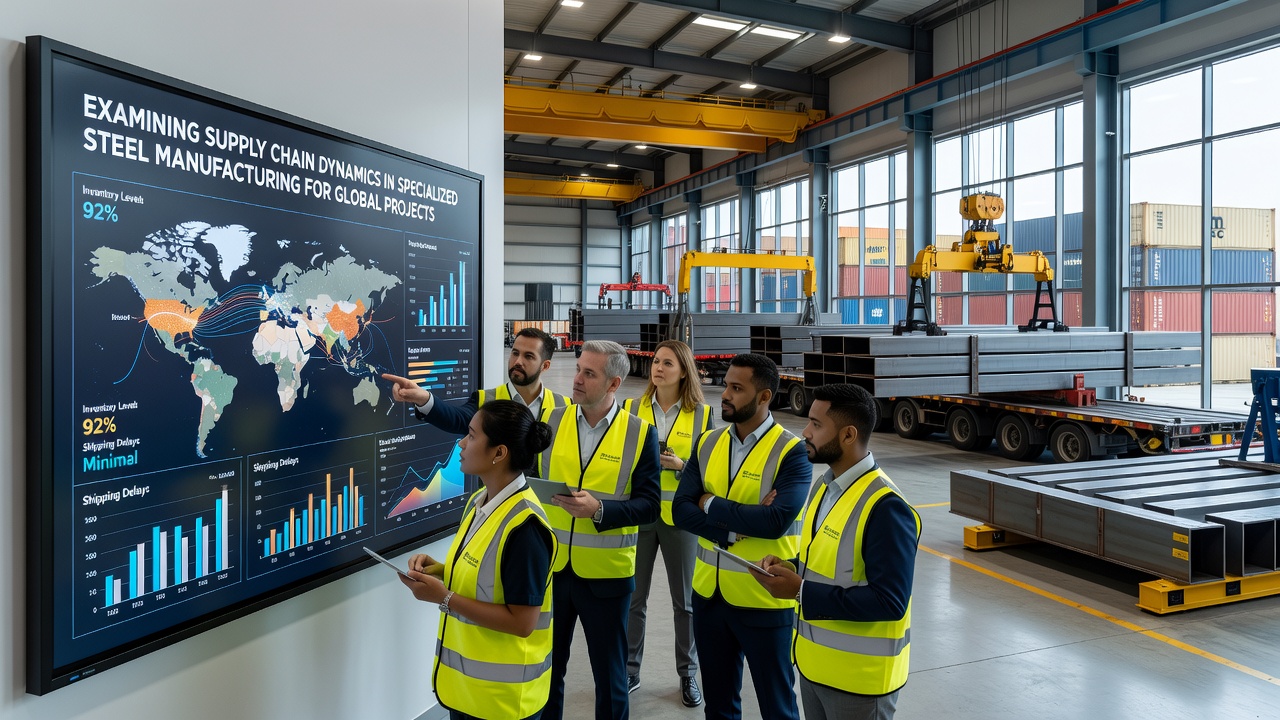
Customs documentation and material test certificates must accompany each shipment. Regulatory bodies in the European Union and the United States require mill certificates issued under EN 10204 3.2 or equivalent third-party verification. Delays in certificate validation can extend clearance times by several days, directly affecting just-in-time erection sequences at remote sites.
Geopolitical and Trade Factors in October 2026
Trade measures continue to shape material flows. Tariffs on certain alloy steels imposed by multiple governments remain in effect, and new reporting requirements for carbon intensity took effect in October 2026 across several jurisdictions. Importers now submit lifecycle assessment data alongside commercial invoices, increasing administrative workload and prompting mills to accelerate adoption of electric arc furnace routes that lower reported emissions.
Supply chain visibility platforms adopted by larger fabricators allow buyers to track heat numbers from melt shop to final destination. These systems integrate AIS vessel tracking with blockchain-secured certificates, reducing the incidence of document discrepancies that previously caused 7 percent of shipments to require re-inspection.
Risk Mitigation Strategies Observed Across the Sector
Project owners and steel suppliers have expanded dual-sourcing arrangements for critical grades. One consortium constructing liquefied natural gas terminals in Qatar secured parallel supply agreements with producers in Japan and South Korea, each certified to identical specifications. This approach reduced single-supplier exposure while maintaining consistent mechanical properties verified through independent laboratory testing.
Inventory buffers at regional distribution centers have grown, with some operators holding three to four months of project-specific stock. Although carrying costs rise, the strategy protects against both shipping delays and sudden specification changes that arise during detailed engineering reviews.
Conclusion
Supply chain dynamics in specialized steel manufacturing reflect the intersection of geological concentration, technical precision requirements, and evolving regulatory frameworks. Data compiled through 2026 show continued reliance on coordinated logistics and certification processes to deliver material that meets the performance demands of large-scale global projects. Observers tracking these flows note incremental adoption of digital tracking tools and diversified sourcing patterns as the primary mechanisms for maintaining continuity.